Do I need a full-size food processor, or is a mini chopper enough?
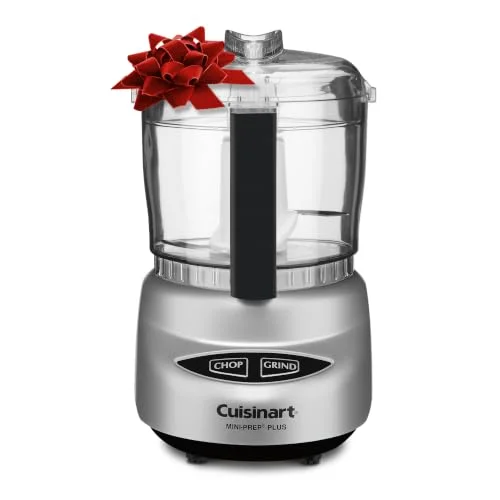
It depends on whether you want to slice and shred. A mini chopper is a blade in a small bowl: it minces garlic, chops an onion, grinds hard cheese and makes a small batch of dressing, then stores in a drawer. It cannot slice or shred, because it has no discs and no feed tube. A full-size processor adds both, plus room for dough and big batches. If your prep is mostly aromatics and sauces, a chopper is enough. If you make slaw, gratins or pie dough, go full-size.
What size food processor should I buy?
Match the bowl to your usual batch, not your biggest. Three to four cups is chopper territory, right for aromatics and one-person meals. Seven to nine cups suits a couple or a small kitchen. Eleven to fourteen cups is the household standard for batch cooking and dough, and sixteen is for large families and entertaining. At every size, the cup number is a dry measure: liquid reaches the top of the center post well before the bowl is full.
Can a food processor dice vegetables?
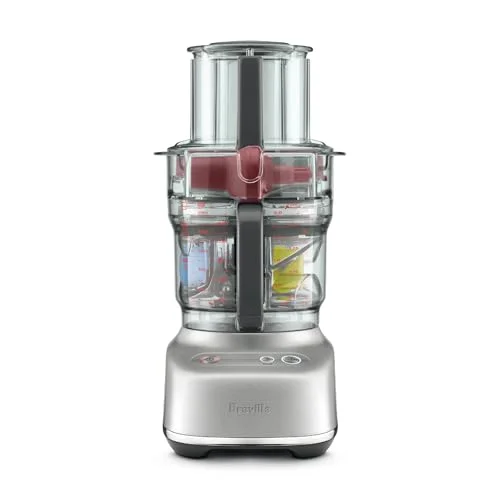
Only if it comes with a dicing kit. The S-shaped blade in every processor and chopper chops: it strikes whatever falls into its path, so you get mixed sizes, and the longer it runs, the more the small pieces turn to paste. Listings use the word dicing loosely for this. Pulsing evenly sized pieces in short bursts gets closer, but not to cubes. Real dicing needs a grid: Breville’s Paradice models slice and then dice in one pass, and the Paradice 16 lists 16, 12 and 8 mm cubes.
Can you knead bread or pizza dough in a food processor?
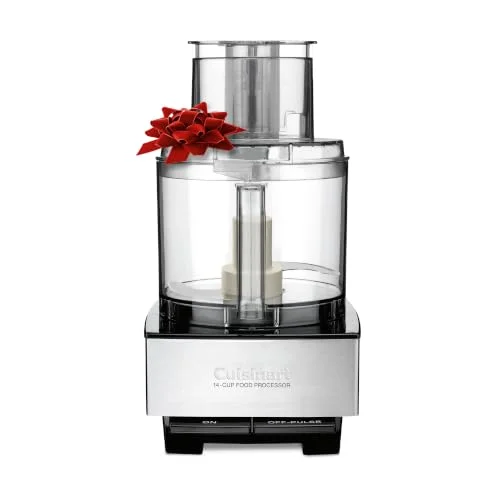
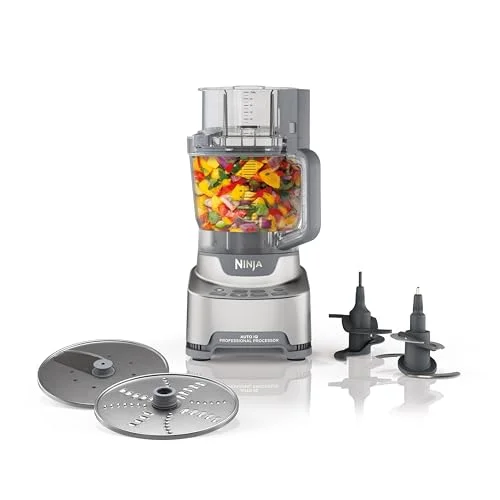
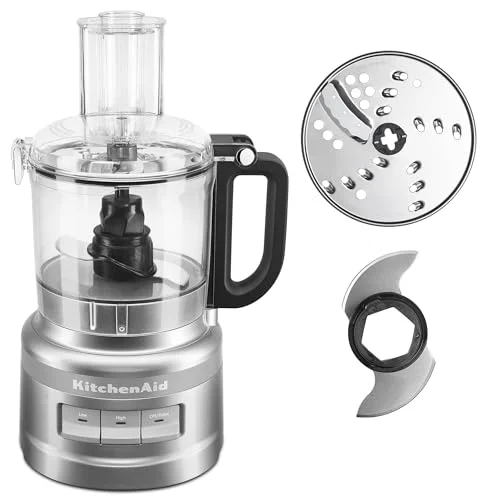
Yes, in modest batches, when the maker says so. A processor kneads quickly, with the regular blade or a dedicated dough blade, and the risk with a large, stiff batch is overheating the motor or the dough. Look for an explicit claim: Cuisinart lists kneading on its 14-cup and FP-1400 and gives the Pro Custom 11 a kneading cover; KitchenAid’s 9-cup, Breville’s Sous Chef models and the Paradice 9 include a dough blade; Ninja has a dough program. Stay within the manual’s batch limits.
Why does my food processor leak when I add liquid?
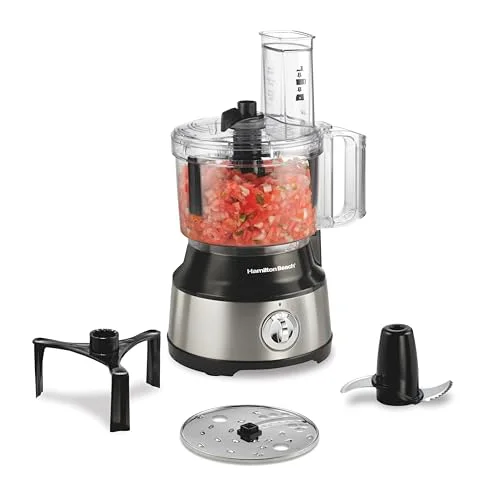
Because the bowl is a ring around a hollow center post that carries the blade. Liquid above the top of that post, or thrown up the walls at speed, works its way down the shaft and out under the bowl or past the lid. Many manuals mark a maximum liquid line well below the advertised capacity. Process wet mixtures in batches, or puree the solids and add the liquid afterward. Hamilton Beach says its 12-cup Stack & Snap bowl is sealed in the center, and Cuisinart’s FP-1400 has a SealTight lid.
Do more watts mean a better food processor?
Not across brands, and not when the figure says peak. Peak watts are the most a motor draws for a moment; an unqualified figure is closer to what it draws while working. Ninja lists 1,000 and 1,200 peak watts, Cuisinart 720 and 625 watts with no qualifier, and KitchenAid and Breville no wattage at all on the listings we read. None of these numbers describes blade shape or sharpness. Compare the jobs each maker commits to — kneading, slicing range, bowl size — instead.
Can a food processor grind meat?
Yes, in small batches. KitchenAid says the four-blade design of its 9-cup model minces 500 grams of chicken, beef or pork in ten seconds, and Ganiza sells its two-bowl chopper for meat as well as vegetables. Cube the meat, keep it very cold, fill the bowl no more than halfway and pulse so it chops rather than smears. Wash the bowl and blade thoroughly afterward. As general food-safety information, USDA guidance sets safe minimum internal temperatures of 160°F for ground beef and pork and 165°F for ground poultry.